Showing posts with label Newbery Medal winners. Show all posts

Saturday, January 11, 2014

Highlights of 2013 Reading - Newbery Medal Selections

I think my blog has been trying to send me a message.  I received 5 emails in the past week that there were anonymous comments on the blog, all of which were about how to get anti-anxiety meds.  Yes, I have been a bit anxious this past year.  No, I am not taking medication for it. And no, I am not going to follow a link from an anonymous comment on a blog to learn how to get alprazolam/zolpidem/any medication in the entire world.  Unfortunately for anonymous commenters, I have now changed the settings to not allow anonymous comments.  Sorry for those of you who liked to comment anonymously, but spam is too annoying. 

Reading: I read 44 books in 2013, the same number of books I read in 2012.  This was not planned and at the beginning of December when I had only 39 on the list, I did not think I would match the previous year.  But the next couple books on the Newbery Medal list were quick ones and I rallied.  Since I didn't do a great job of updating the blog on my reading, here are the highlights.

To recap my Newbery challenge: I plan to read all Newbery Medal winners from the year I was born to the present, in the order they won.  I am not reading runners-up or honorable mentions, just the winners. I am providing a link to the complete list of Newbery Medal winners so you can follow along at home.
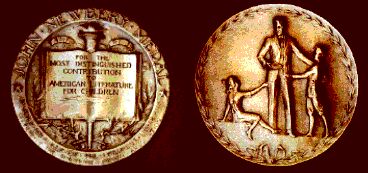

I completed 19 Newbery Medal winners, the selections from 1971 to 1989.  Coincidentally, the last one read was from the year I graduated from high school, so I have read through my childhood.  I liked some better than others (no surprise, of course). 

Since one of the winners was the 4th book in a 5 book series, I read the other 4 in the series also (the winner was The Grey King by Susan Cooper, the series was The Dark is Rising) and discovered I do like some fantasy books after all.  It incorporated legends of King Arthur and different mythologies into the classic good versus evil story with some fun time-travelling. 

Another of the books,  Dicey's Song by Cynthia Voigt, was a sequel so I also re-read the first book (Homecoming).  Part of the reason for re-reading was just an excuse to re-experience some books by a favorite author from when I was in high school.  I loved the strong female characters in these books.  Homecoming is the story of 4 siblings whose mother leaves them in the parking lot of a mall in Connecticut.  Dicey, the oldest at 13, realizes her mother is not coming back and leads her siblings to the home of a relative they have never met.  They are walking, have little money and are not sure what awaits them.  It is a very emotional journey as the reader and the siblings encounter many characters along the way and struggle to know whom to trust.  Dicey's Song picks up their story after the journey, as the siblings try to adapt to their new home and still try to understand their mother and why she left them.  Heavy stuff for young adult fiction, but very well written and fully-formed characters.

Some other Newbery winners I liked with similarly heavy subject matter: The Slave Dancer by Paula Fox (13-year old Jessie is kidnapped and sent on a slave ship where his job is to play his fife and "dance" the slaves to keep their bodies strong and therefore profitable) and  Roll of Thunder, Hear My Cry by Mildred Taylor (racism in Mississippi during the Great Depression).

A few of the winners were books I had read one or several times before.  One of my "rules" with this challenge was that I would re-read them, no matter how recently I had last read them.  Re-reads were a chance to fall in love all over again with some of my favorites: Bridge to Terabithia by Katherine Paterson (story of 2 outcasts who become friends and create a wonderful imaginary kingdom where they rule.  Made me cry, just like it did the first time I read it.); The Westing Game by Ellen Raskin (wonderfully written mystery with great characters - kept me guessing and trying to figure out who-done-it just like the first time.  Apparently I did not remember the ending...); Sarah, Plain and Tall by Patricia MacLachlan (a slim book about 2 children, their widowed father and a woman who answers a newspaper ad and moves from Maine to the Midwest prairie to become their mother and wife).

Some of the books I expected not to like (because of subject matter, style, or main characters who were rodents) but enjoyed thoroughly: Mrs. Frisby and the Rats of NIMH by Robert O'Brien (actually found myself cheering for the Frisby family (mice) and the rats as they work together to move the mouse family's home out of danger's way and keep one step ahead of the research lab);  A Visit to William Blake's Inn by Nancy Willard (a collection of magical and fanciful poems inspired by William Blake's Songs of Innocence and Songs of Experience); Joyful Noise: Poems for Two Voices by Paul Fleischman (insect-inspired poems written to be read aloud by 2 people - I made E read a few of them with me); and Lincoln: a photobiograpy by Russell Freedman (I didn't really know what to expect and thought I knew everything I needed to know about Abraham Lincoln.  Turns out, I knew next-to-nothing about this fascinating man.  Wonderfully written and great illustrative photos of key points.).

Other books I liked that don't fit into one of the weird random categories I created above: Julie of the Wolves by Jean Craighead George (an Eskimo girl escapes a bad family situation and lives among a pack of wolves - an inadequate description of a book full of cultural commentary and nature lessons); A Gathering of Days: A New England Girl's Journal, 1830-1832 by Joan Blos (historical novel about a 13-year-old girl who experiences loss of a friend and her father's remarriage, and helps an escaped slave.  And I LOVE epistolary books!); Dear Mr. Henshaw by Beverly Cleary (a boy starts writing letters to his favorite author as part of an assignment for school.  His letters soon turn to journal entries as he tries to become a writer himself, and we learn about his struggles with his parent's divorce, his absent father, loneliness in a new school and someone who keeps stealing his lunch.  Did I mention I LOVE epistolary books?); Jacob Have I Loved by Katherine Paterson (which I described in a previous post). 
 
There you have it. Some of the Newbery Medal winners I enjoyed last year.

Coming (hopefully) soon: other reading highlights from 2013.

Until we read again,
Hallie

Monday, October 07, 2013

It's Been a Long Time

So when one has been too busy with other things to post on her blog for, oh, about 4 months, she has a couple ways of proceeding.  Never post again and abandon the blog.  Start back and try to catch up with all that has happened in the time lapse.  Or apologize to the 15 people who read the blog regularly in the past, and go forward, leaving the readers to wonder what happened in the lapse. 

Having learned in college that once I fall behind (such as with reading for my religion class freshman year or philosophy class senior year), it is nearly impossible to catch up after a period of time.  There simply are not enough hours in the day or days in the week.  I apologize, but other than if the topics fit into what I plan on blogging about, you will likely not read about the books I have read, recipes I have tried, or other events of the last 4 months.  Sorry.  Just can't do it, so the second option above is out.

For people who hate this blog (there probably are some, though I would think that if someone hates it, they wouldn't continue to read it.  If they do, then it is their own stupid fault.), I enjoy blogging too much to abandon it.  Option one, out.

So, dear readers, my apologies for a long absence.  My only excuse has been excessive amounts of work, though there were plenty of other distractions as well, some enjoyable, some tolerable and some that just needed to be completed.  I am back now, so let me get started already!

Eating: The fall CSA is upon us.  The tomatoes have wrapped up.  The cabbage and winter squash are abundant.  The root vegetables are coming in.  Continuing a theme I started last year in When Life Gives You Kale, Make Kale Chips and then in Part 2 of that post, here are some additional recipes.

When Life Gives You Tomatoes...

Make Tomato Pasta Sauce.  My grandma called just to give me recipes to use up the 10+ pounds of tomatoes that I picked after we got home from vacation.  This was one of them.  I only made 1/3 of the recipe because I had already used a bunch of the tomatoes for Roasted Tomato Soup (already blogged on the first "when life gives you..." post), Chicken Pasta Fresca (posted here) which really has a different name that I can never remember, as well as Salsa (recipe to follow shortly).  I also froze some of the cherry tomatoes like I do with strawberries (wash them, freeze in a single layer on a cookie sheet and then pack into freezer bags).  And I ate a bunch while picking them and as a snack (or 4 snacks). 

Anyway, here is Granny's Tomato Sauce recipe:
4 medium onions, chopped
3 small garlic gloves
3 Tbls oil
4 1/4 pounds tomatoes
4 six-ounce cans tomato paste
1 pound mushrooms, sliced (I did not add the 'shrooms)
1 C. chopped parsley
3 Tbls sugar
3 Tbls salt
4 tsp oregano leaves
2 bay leaves

In a large kettle over medium-high heat, heat oil and cook onions and garlic until limp.  Discard garlic (I left mine in but had crushed it and couldn't really find it to get it out).  Add remaining ingredients.  Simmer covered on low for 2 hours.  Refrigerate until chilled and freeze.  (Mine is in freezer bags in 1 cup serving sizes - 1/2 C for each of us - and I used the immersion blender to smooth it out.  Someone at my house doesn't like chunks in his sauce.)  Yummy and not full of preservatives and junk.

Reading: I have read about 15 books since I last blogged, so will only comment here on the most recent couple.  As you may know, I have been reading some of the Newbery Medal winners this year, starting with the one that won the medal the year I was born. I figured I would have enough to read if I just stuck to my lifetime for now.  The most recent NBM book I finished was Jacob Have I Loved by Katherine Paterson, the winner in 1981. Ms. Paterson also wrote the 1978 winner Bridge to Terabithia.  I loved both of these books, enough that I plan to seek out more by the author. 

Jacob Have I Loved is the story of Sara Louise (aka "Wheeze" to her sister, and "Louise" to most everyone else) who lives in the shadow of her talented, beautiful, delicate twin Caroline.  They live with their family on a small island in Chesapeake Bay in the 1940's, where all struggle to make a living by crabbing.  Her cranky grandmother (who has dementia, per my diagnosis) lives with Louise and her family, and taunts Louise with a quote from the Bible: "Jacob have I loved, but Esau have I hated." which references another set of twins long ago engaged in a bit of sibling rivalry.  I learned a lot about crabbing, the Bible and sibling relationships.  Easy read and very good.

Bridge to Terabithia I read a couple months ago, and had actually listened to it in my car about 7 years ago (when I used to commute and listen to audio books to try to quell the road rage).  It is a story of Jesse, an artistic boy who is all alone even in a group or in his big family, and Leslie, a newcomer who is smart and tomboy.  Like Jesse, she also doesn't quite fit in.  Together they create an imaginary land where they rule as king and queen.  I don't want to spoil the book so will stop there, but overall an amazing story of the type of friendship that transforms a person's life.  This book was made into a movie a few years back (I have not seen it), and it is a book that gets challenged and banned frequently, so I believe it is better known than Jacob.  Both are worth checking out.

Book club just discussed The Romanov Bride by Robert Alexander.  This is the author's 3rd book of historical fiction about the Russian Revolution, the first being The Kitchen Boy.  I thought Kitchen Boy was the stronger of the 2 I have read (the middle one is Rasputin's Daughter and is on my shelf to read next) but liked this one as well.  In all 3, he has taken peripheral characters to tell the story of the Revolution from their viewpoints.  In Kitchen Boy, we are with Tsar Nicholas and his family during their last days, through the eyes of a servant.  In Bride, we learn the two sides of the Revolution - one through Pavel, a peasant-turned-assassin working for the revolutionists, and one through Ella, a Romanov duchess and the sister of Tsarina Alexandra.  The story is told in alternating voices between the two.  I found this a perfect way to tell both sides, how it displayed the mistakes made on the part of the royals as well as the way the Communists used propaganda and stirred up mob mentality to get the peasants to revolt and carry out assassinations.  The story of Ella herself was quite interesting (after her husband is assassinated, she starts a convent and provides nursing to the poor, soldiers, and whoever else needs it). Since the author had access to her letters and diaries, and since she was a real person, her story was the stronger of the two.  Pavel's story is more of a vehicle to tell the revolutionists' point of view and his character is more flat and stereotypical, though definitely serves it purpose.

Weeding: The veggie garden got cleaned out yesterday.  The asters are blooming their purple heads off and the mums are in full bloom as well.  Some of the plants (notably the Husker Red Penstemon) have beautiful fall color in their leaves.  The Husker Red is a deep burgundy color all summer, then turns brilliant red in autumn.  So lovely. 

Thank you for coming back to read my blog.  I hope you enjoyed it.  I missed blogging and will try to post more frequently in the coming weeks.

Until we eat again,
Hallie


Saturday, March 09, 2013

My First Book Report of 2013

Reading: Why, yes, I have been reading this year.  No, I have not told you about anything I have read yet.  Here is my first book report this year.

When someone asks me what my favorite book is, or what the best book that we have read in book club, I instantly answer, "Life of Pi, by Yann Martel".  I have done this ever since we read it 8 years ago, or whenever it was.  Funny thing, though.  I had not re-read this book, not even re-opened it, until this year.  I am not sure what took me so long.  I even started to wonder if it really was as great as I told myself and everyone else.  I started to feel guilty that I was recommending this book to dozens of people and maybe it was really crap.  So I re-read it and fell in love all over again.  There is so much in this book, and not just because it is rather thick.  There is an action-adventure/survival story.  There is a terrific wealth of discussion on animal nature and the best-written defense of zoos that I have ever heard.  There is a hearty embrace of religions of all types.  There is a likable hero, tragedy and loss, a realistically told struggle to survive, and a bit of a fable and fairy tale.  One friend to whom I had recommended the book sometime last fall was reading it recently and had only read about a quarter of it but already wanted to buy her own copy (she is borrowing the book from another friend of ours) so that she could highlight and underline.  As I discussed the book with her, I was tempted to go back and read it yet again.  She is seeing another whole layer to it that I did not - that all the author's observations on animal nature could be read as a commentary on human nature, a reminder that we, too, are animals, though we tend to put ourselves on a higher plain.  I may never be done reading this book.  And I recommend it to you as well. If you read it, or have already read it, I would love to discuss with you anytime.  I realize I have not given an actual plot summary.  This is from the back of the book: "Pi Patel, a God-loving boy and the son of a zookeeper, has a fervent love of stories and practices not only his native Hinduism, but also Christianity and Islam.  When Pi is sixteen, his family and their zoo animals emigrate from India to North America aboard a Japanese cargo ship.  Alas, the ship sinks - and Pi finds himself in a lifeboat, his only companions a hyena, an orangutan, a wounded zebra, and a 450-pound Bengal tiger.  Soon the tiger has dispatched all but Pi.  Can Pi and the tiger find their way to land?  Can Pi's fear, knowledge and cunning keep him alive until they do?"

February book club we discussed Seven Years in Tibet by Heinrich Harrer.  You may have seen the movie.  I had not, so I read the book.  I am glad I did.  This was another journey and adventure story, non-fiction this time.  At the outbreak of World War II, the author (an Austrian) is in a British internment camp in India.  He escapes and the book details his trek across the Himalayas to Tibet, where he spends - you guessed it - seven years.  Obviously he survives the ordeal in the remote parts of the mountains (he wrote the book, right?), though he and his fellow escapee find danger, hunger and hindrances of all kinds around every corner.  They have no real map and are some of the first foreigners to the little secluded land of Tibet.  I enjoyed the journey, though found it a bit too detailed at times and was anxious for them to finally get to Tibet.  I loved learning about Tibet, the Dalai Lama (and trying to remember what I had learned about the Dalai Lama in college) as well as the people and traditions.  The book ended as the Chinese invaded, so I would like to continue learning more about what it has been like in Tibet since that time. 

The next 3 books I read went pretty quickly.  If you recall, one of my "predictions" for 2013 was that I would be reading some of the Newbery Medal winners.  I decided to start with 1971, the year I was born, and read the winners from within my lifetime. 
1971 - Summer of the Swans by Betsy Byars - I read this in just over a day.  Simple story of Sarah, a 14-year-old girl (I think that is how old she was), with the usual complaints of a 14-year-old.  Then one day her mentally-challenged non-verbal younger brother, Charlie, (the book uses the term "mentally retarded" - it was the term we used then) is missing.  As Sarah searches for Charlie, joined by her sworn enemy Joe, she learns something about herself, her family and what is really important.  Apparently this book was also made into an ABC Afterschool Special called "Sarah's Summer of the Swans."  I don't remember watching this particular special, but there are others I recall well.  Also, I remember reading another book by this same author when I was in sixth grade.  It was called Pinballs or The Pinballs and was about a group of kids who all had special needs of some sort.  I don't remember much more about that book but found it interesting that when I saw the author's name, I thought, "Oh.  I think that is who wrote Pinballs."  And sixth grade was a long time ago...
1972 - Mrs. Frisby and the Rats of NIMH by Robert O'Brien - this one took me a bit longer to read.  I wasn't sure I was going to like it, considering it was about a "widowed" mouse, her children and a group of very special rats.  I ended up loving it and by the end was cheering for the mice and rats, wishing for their survival.  And that is very weird for me.  If there are 2 things I cannot stand, it is rats and mice.  Give me snakes, bugs, spiders, lizards, or anything else (except bats which are really just flying mice), but keep mice and rats (and their cousins gerbils and hamsters) away from me.  I watch a certain scene from one of the Indiana Jones movies with my hands over my ears and my eyes closed tight until I am told by someone trustworthy that the scene is over.  Anyway, the book is about this mouse family and a group of super-intelligent rats who help her when her youngest son is ill and her home is in danger of being destroyed by a plow.  You will need to read the story to find out how the rats got so smart and why they help a lowly field mouse. 
1973 - Julie of the Wolves by Jean Craighead George - I finished this one up right before leaving on vacation.  It is the story of a thirteen-year-old Eskimo girl in Alaska. She has run away from her husband in Barrow, Alaska (at the very tippy top of Alaska) and is heading for San Francisco where her penpal lives.  She has to use what she has learned about the "old ways" of her people and about the unforgiving landscape of the tundra in order to survive.  She is adopted by a pack of wolves, but autumn is coming so she must continue on.  Very interesting story for many reasons.  The conflicts of "wild" vs. "civilization", the old ways vs. the ways of the whites, and of nature vs. Man (or in this case, girl).  The natural history lessons of the dynamics of a wolf pack and of life on the tundra.  The social commentary about how the native peoples were "civilized" by sending them to school.  Another good book and excellent survival story.

Well, E just saw this post and commented "Holy words, Batman!" so I guess that is enough for this blog post.  Stay tuned for another book report and a recap of our cruise to the Bahamas.  Ahh.... sunshine!

Until we read again,
Hallie
Related Posts Plugin for WordPress, Blogger...